
Understanding herringbone mesh: A Technical Deep Dive
In industrial filtration and separation, the choice of woven wire mesh significantly impacts efficiency, durability, and cost-effectiveness. Among the specialized weave patterns, herringbone mesh stands out for its unique structural integrity and superior performance characteristics. This intricate weave, characterized by its distinctive "V" or "inverted V" pattern, offers enhanced stability and particle retention compared to more conventional plain or twill weaves. Widely fabricated from high-grade stainless steel, it serves critical functions across a multitude of demanding sectors, ensuring reliable and precise filtration in scenarios where consistency is paramount.
The construction of herringbone mesh involves a complex interlacing of warp and weft wires, typically in a variation of the twill weave where the diagonal lines reverse direction at regular intervals. This creates a stronger, more compact, and dimensionally stable mesh with excellent resistance to deformation under pressure. Its robust nature makes it an indispensable component in applications requiring precise particle separation, high flow rates, and long service life, even in corrosive or high-temperature environments. Understanding its technical specifications, manufacturing intricacies, and diverse applications is key for B2B decision-makers seeking optimal industrial solutions.
What is Herringbone Weave? A Structural Explanation
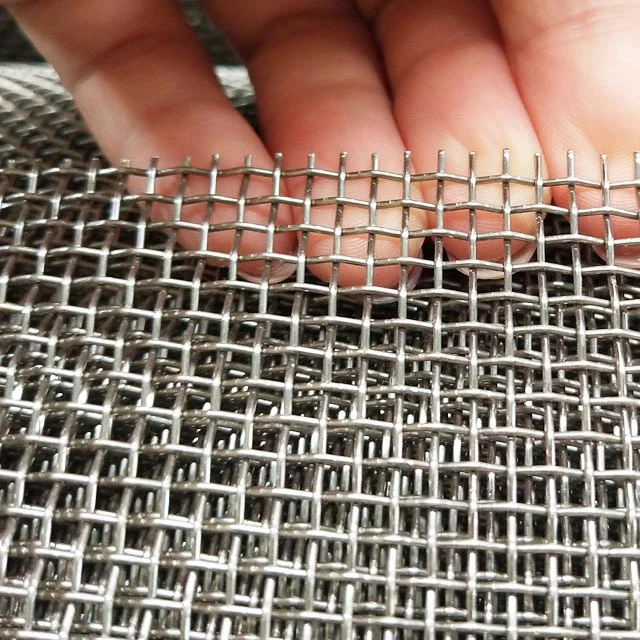
The defining characteristic of herringbone mesh lies in its unique herringbone weave pattern. Unlike standard twill weave, where diagonal lines run continuously in one direction, the herringbone weave pattern reverses the direction of the diagonal lines at specific points, creating a distinct broken zig-zag effect, resembling the bones of a herring. This structural innovation results in several key advantages:
- Enhanced Stability: The reversing diagonal pattern distributes stress more evenly across the mesh, leading to superior dimensional stability and resistance to stretching or deformation, particularly beneficial in high-pressure or vibratory applications.
- Improved Filtration Precision: The compact nature of the weave can create smaller, more uniform pore openings compared to other weaves with similar wire diameters, enabling finer and more consistent filtration down to micron levels.
- Increased Strength: The interlocking pattern provides greater tensile strength and resistance to tearing or fraying, extending the mesh's operational life.
- Better Flow Characteristics: While tightly woven, the specific alignment of wires in herringbone mesh can still facilitate optimal fluid flow while maintaining filtration integrity, crucial for minimizing pressure drop.
Typically, stainless steel grades like 304, 304L, 316, and 316L are preferred for herringbone mesh due to their excellent corrosion resistance, high temperature tolerance, and mechanical strength. These materials ensure the mesh maintains its structural and filtration integrity even in aggressive chemical environments or elevated temperature operations.
Manufacturing Process Flow for Stainless Steel Herringbone Weave Wire Mesh
The production of high-quality stainless steel herringbone mesh is a meticulously controlled multi-stage process, ensuring adherence to stringent technical specifications and performance standards. It combines advanced metallurgical practices with precision weaving technology.
Process Steps:
-
Material Selection & Wire Drawing:
High-grade stainless steel rods (e.g., AISI 304, 316L) are selected based on end-application requirements for corrosion resistance and strength. These rods undergo a drawing process, where they are pulled through progressively smaller dies to achieve precise wire diameters, often ranging from 0.02mm to 0.5mm, with tight tolerances. This step is critical for ensuring uniform mesh apertures.
-
Precision Weaving:
The drawn wires are then loaded onto specialized weaving looms configured to produce the intricate herringbone pattern. The warp wires (running lengthwise) and weft wires (running crosswise) are interlaced with high tension and precision. Unlike standard twill, the loom specifically changes the direction of the diagonal lines at regular intervals, demanding advanced machine control to maintain uniformity and weave integrity across large mesh sheets.
-
Annealing & Cleaning:
After weaving, the mesh may undergo an annealing process to relieve internal stresses induced during weaving, enhancing its ductility and dimensional stability. Subsequently, it is thoroughly cleaned using ultrasonic baths and specialized degreasing agents to remove any lubricants, oils, or particulate matter, ensuring a pristine surface free of contaminants, vital for sensitive applications like food processing or pharmaceuticals.
-
Slitting & Fabrication:
The finished woven mesh is then precisely slit into specified widths and lengths using automated cutting equipment. Depending on the application, it may undergo further fabrication steps, such as calendering (flattening for specific pore size control), welding into filter elements, or forming into custom shapes. CNC machining might be employed for precise cutting and edge finishing for specialized filter components.
-
Quality Control & Testing:
Rigorous quality control is exercised at every stage. Final products undergo comprehensive testing, including visual inspection for weave defects, optical microscopy for aperture size verification, tensile strength tests (e.g., ASTM E8), and corrosion resistance tests (e.g., ASTM G31). Adherence to international standards such as ISO 9001 for manufacturing quality, and specific standards like ASTM E2016 for woven wire mesh, is strictly maintained.
-
Packaging & Dispatch:
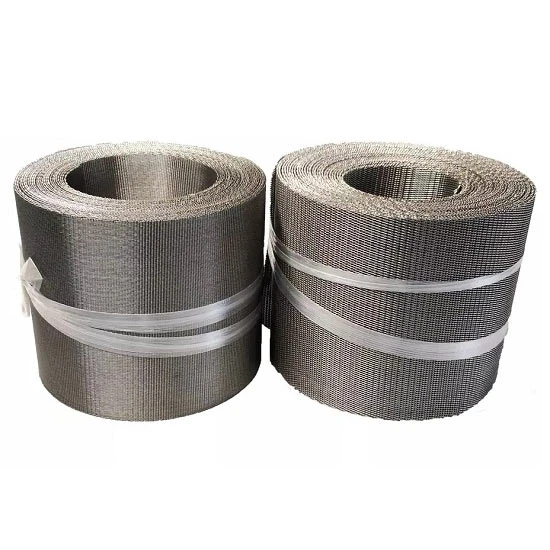
Finally, the finished herringbone mesh products are carefully packaged to prevent damage during transit, often using moisture-proof materials and robust crates, ready for dispatch to target industries such as petrochemical, metallurgy, pharmaceuticals, and water supply & drainage.
This meticulous process ensures that the resulting stainless steel herringbone mesh exhibits exceptional properties, including superior corrosion resistance, high mechanical strength, and precise filtration capabilities, directly translating into energy saving and prolonged service life in demanding industrial environments.
Key Industry Trends in Wire Mesh Filtration
The industrial filtration sector is continually evolving, driven by stricter environmental regulations, increasing demand for product purity, and the need for greater operational efficiency. Several key trends are shaping the future of woven wire mesh, particularly for advanced configurations like herringbone mesh:
- Miniaturization and Finer Filtration: There's a growing demand for finer filtration capabilities, often down to sub-micron levels, to meet the stringent purity requirements in pharmaceuticals, electronics, and fine chemicals. This drives innovation in weaving technology to produce meshes with incredibly small, uniform apertures.
- Enhanced Material Performance: Development of new alloy combinations and surface treatments for stainless steel offers improved corrosion resistance, higher temperature tolerance, and better chemical inertness, expanding the application scope of herringbone mesh in extreme conditions.
- Sustainability and Longevity: Industries are prioritizing solutions that offer extended service life and reduced waste. Durable mesh types like herringbone contribute to sustainability by minimizing replacement frequency and maintenance downtime.
- Smart Filtration Systems: Integration of sensors and IoT (Internet of Things) for real-time monitoring of differential pressure, flow rates, and filter integrity is becoming more common, allowing for predictive maintenance and optimized filtration cycles.
- Customization and Application-Specific Design: Standard meshes are being replaced by highly customized solutions, where mesh specifications (material, weave, aperture size, dimensions) are precisely tailored to unique process requirements, optimizing performance and cost.
These trends underscore the importance of specialized products like herringbone mesh, which offer the versatility and robustness required to adapt to future industrial challenges.
Technical Specifications of Stainless Steel Herringbone Weave Wire Mesh
The performance of herringbone mesh is directly attributed to its precise technical specifications. The following table provides typical parameters for common stainless steel herringbone weave configurations:
| Parameter | Standard Range | Description/Notes |
|---|---|---|
| Material Grades | SS 304, 304L, 316, 316L | Selected for corrosion resistance, temperature, and chemical compatibility. |
| Mesh Count (wires/inch) | Typically 60x60 to 200x200 (approximate) | Indicates density; finer meshes have higher counts. |
| Wire Diameter | 0.025 mm - 0.5 mm (0.001" - 0.020") | Influences mesh strength and open area. |
| Nominal Micron Rating (Filtration) | ~5 µm - 200 µm | Effective particle retention size. Can vary based on weave density. |
| Open Area | 20% - 50% | Percentage of open space influencing flow rate and pressure drop. |
| Tensile Strength | 520-620 MPa (for SS 304) | Resistance to breaking under tension. |
| Temperature Resistance | Up to 800°C (SS 304), 870°C (SS 316) | Operational limits in high-temperature processes. |
These parameters are critical in specifying the correct herringbone mesh for a given application, balancing filtration efficiency, flow rate, mechanical strength, and chemical compatibility.
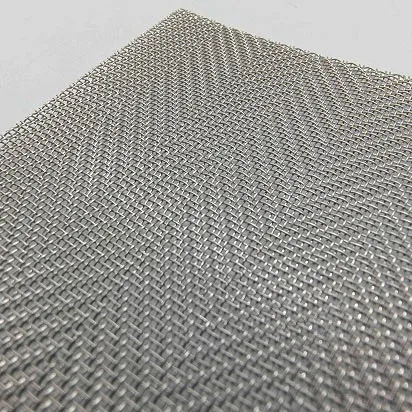
Figure 1: Close-up of Stainless Steel Herringbone Weave exhibiting its characteristic pattern.
Application Scenarios and Target Industries
The robust construction and precise filtration capabilities of herringbone mesh make it ideal for a wide array of demanding industrial applications where reliability and longevity are paramount. Its superior stability under pressure and fine filtration capacity allow it to excel where other weaves might fail.
-
Petrochemical and Oil & Gas:
Used in catalyst support, sand control screens, fluid bed applications, and as filter elements in refining processes. The corrosion resistance of stainless steel herringbone mesh is crucial for handling aggressive hydrocarbons and corrosive byproducts, contributing to energy saving by maintaining efficient flow and reducing equipment downtime.
-
Metallurgy and Mining:
Employed in vibrating screens for ore classification, dewatering, and filtration of molten metal or slurry. Its mechanical strength and abrasion resistance ensure durability in harsh, high-impact environments.
-
Water Supply & Drainage / Wastewater Treatment:
Critical for pre-filtration, effluent treatment, and raw water intake screens. The fine filtration of herringbone mesh helps remove suspended solids, protecting downstream equipment and meeting environmental discharge standards.
-
Food & Beverage:
Used in juice filtration, brewing, dairy processing, and edible oil refining. Stainless steel (especially 316L) offers excellent hygiene, ease of cleaning, and resistance to food acids, ensuring product purity and compliance with FDA regulations (where applicable for material contact). The stability of the mesh prevents fiber shedding.
-
Pharmaceuticals and Fine Chemicals:
Essential for particle separation, active pharmaceutical ingredient (API) recovery, and solvent filtration. The precise micron rating and inertness of stainless steel are critical for maintaining product integrity and preventing contamination.
In all these scenarios, the technical advantages of herringbone mesh – specifically its robust construction, precise aperture control, and exceptional material properties – ensure superior performance, extending service life and reducing operational costs.
Technical Advantages of Herringbone Mesh
The distinctive herringbone weave offers a suite of technical advantages that position it as a premium choice for challenging industrial filtration and separation tasks:
-
Superior Dimensional Stability:
The reversing diagonal pattern prevents stretching and sagging, maintaining uniform pore size even under high differential pressures or mechanical stress. This ensures consistent filtration efficiency over time.
-
High Mechanical Strength:
The dense, interlocked weave structure provides exceptional resistance to tearing, abrasion, and impact. This robustness is critical for longevity in demanding environments and reduces maintenance frequency.
-
Precise and Consistent Filtration:
The tight weave allows for very fine and accurate particle separation, offering superior retention compared to many other weave types. This is essential for applications requiring high purity levels.
-
Excellent Corrosion Resistance:
When fabricated from stainless steel grades like 304, 316, or 316L, herringbone mesh exhibits outstanding resistance to various corrosive chemicals, acids, and alkalis, extending its service life in aggressive process streams.
-
High Temperature Performance:
Stainless steel construction allows the mesh to operate effectively at elevated temperatures without losing structural integrity or filtration efficiency, making it suitable for hot gas filtration or high-temperature liquid processes.
-
Optimized Flow Characteristics:
Despite its tight weave, careful design can optimize the open area to achieve a balance between fine filtration and acceptable flow rates, minimizing pressure drop and energy consumption in pumping systems, leading to substantial energy saving.
These advantages collectively contribute to a longer service life, reduced operational costs, and improved process efficiency, making herringbone mesh a strategic investment for critical industrial applications.
Vendor Comparison: Selecting the Right Herringbone Mesh Supplier
Choosing a supplier for industrial-grade herringbone mesh requires careful consideration beyond just price. Key factors include manufacturing expertise, quality control, customization capabilities, and post-sales support. A comparative approach helps identify a partner who can meet stringent B2B requirements.
| Feature/Criterion | Leading Manufacturer (e.g., AnSheng Filter Screen) | Standard Supplier |
|---|---|---|
| Manufacturing Standards | ISO 9001 certified, ASTM E2016, DIN 4192 compliance. Full traceability. | Basic internal standards, limited external certifications. |
| Customization Capabilities | Extensive; custom materials, weave patterns, micron ratings, dimensions, fabricated parts. | Limited to standard sizes and material grades. |
| Quality Control | Multi-stage inspection, optical microscopy, tensile testing, material analysis (Spectrograph). | Primarily visual inspection. |
| Technical Support & Expertise | Dedicated engineering team, application consulting, material science guidance. | Basic product information, limited application support. |
| Lead Time & Reliability | Consistent and predictable lead times, strong supply chain management. | Variable lead times, potential for delays. |
| Warranty & After-Sales | Comprehensive product warranty, responsive customer service, issue resolution. | Limited or no explicit warranty. |
Leading manufacturers, with their deep expertise in stainless steel herringbone mesh, offer not just a product, but a complete solution backed by rigorous quality assurance and engineering support, ensuring optimal performance and long-term value.
Customized Solutions for Optimal Performance
Recognizing that no two industrial applications are identical, leading suppliers of herringbone mesh offer comprehensive customization services. This bespoke approach ensures that the mesh perfectly integrates into specific system requirements, maximizing efficiency and operational lifespan.
- Material Selection: Beyond standard 304 and 316L, specialized alloys can be utilized for extreme temperatures, highly aggressive chemicals, or specific mechanical properties.
- Weave Configuration: Adjustments to wire diameter, mesh count, and even the "V" pattern's periodicity can fine-tune filtration efficiency, flow rate, and mechanical strength.
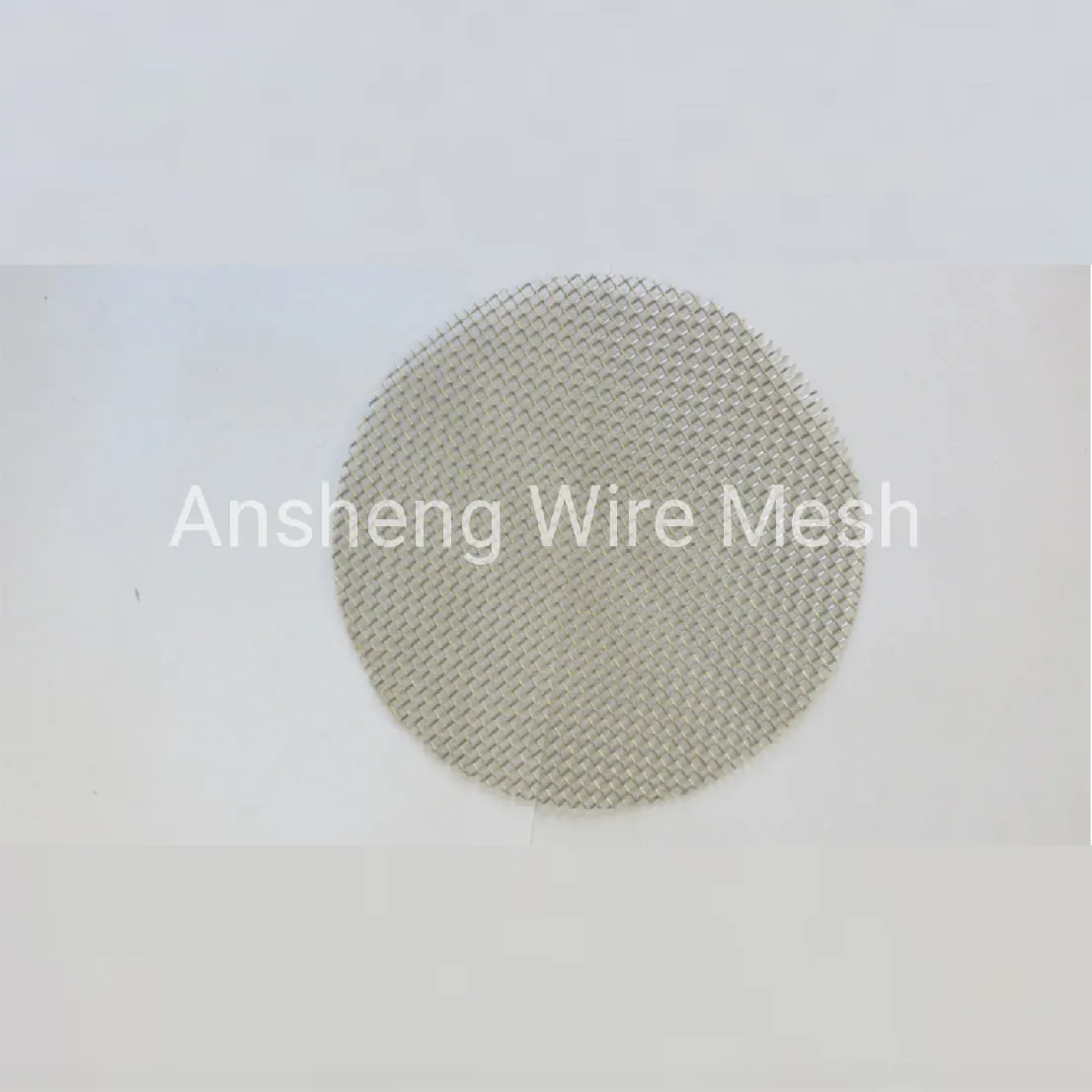
- Dimensions and Forms: Custom widths, lengths, and specific fabricated forms (e.g., cut pieces, filter discs, cylindrical elements, pleated filters) are manufactured to integrate seamlessly into existing equipment.
- Surface Treatments: Options like electropolishing or specialized coatings can further enhance corrosion resistance, reduce friction, or improve cleanability for specific applications.
This level of customization, backed by engineering expertise and decades of experience in wire mesh fabrication, ensures that clients receive a solution precisely engineered for their unique challenges, optimizing system performance and achieving superior ROI.
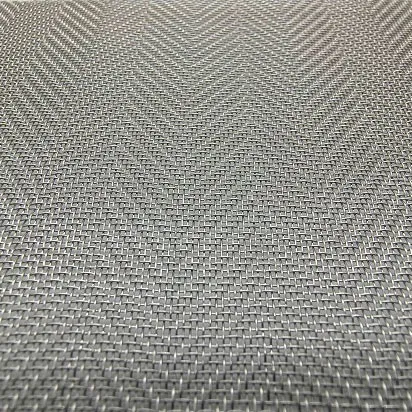
Figure 2: Custom fabricated Stainless Steel Herringbone Mesh filter element for industrial application.
Application Case Studies (Experience & Authoritativeness)
Real-world applications demonstrate the tangible benefits of deploying high-quality herringbone mesh solutions:
Case Study 1: Petrochemical Catalyst Recovery
A major petrochemical plant faced persistent issues with catalyst fines escaping their reactor vessels, leading to product contamination and premature wear of downstream equipment. Traditional plain weave filters were prone to deformation under the high-temperature and high-pressure conditions, resulting in frequent replacements and costly downtime. After consulting with AnSheng Filter Screen, a custom herringbone mesh filter element fabricated from SS 316L with a specific micron rating was designed. The enhanced dimensional stability and mechanical strength of the herringbone weave significantly improved catalyst retention efficiency by 99.8%, extending filter service life by over 150% and reducing maintenance costs by 40% annually. This demonstrated the direct impact of superior mesh design on operational continuity and energy saving.
Case Study 2: Municipal Wastewater Pre-treatment
A municipal wastewater treatment plant required robust pre-screens capable of handling variable flow rates and abrasive solids without frequent clogging or structural failure. Existing screens struggled with debris accumulation and premature wear. Implementing large-format herringbone mesh panels, specifically engineered for high flow and self-cleaning characteristics, provided a breakthrough. The inherent strength and consistent aperture of the herringbone weave ensured reliable separation of coarse solids, reducing the load on subsequent filtration stages. This led to a 25% improvement in overall plant efficiency, a 30% reduction in backwash frequency, and an extended operational life of the pre-screens by over 3 years, significantly cutting down on operational expenditures and improving environmental compliance.
Frequently Asked Questions (FAQ)
Q1: What makes herringbone mesh different from standard twill weave mesh?
A1: While both are variations of twill, herringbone mesh features a distinctive pattern where the diagonal lines reverse direction at regular intervals, creating a "V" shape. This structural change provides superior dimensional stability, enhanced strength, and often finer, more consistent filtration compared to continuous diagonal lines of standard twill.
Q2: What are the primary benefits of using stainless steel for herringbone mesh?
A2: Stainless steel (e.g., 304, 316L) offers excellent corrosion resistance, high mechanical strength, and superior temperature tolerance. These properties ensure the herringbone mesh maintains its integrity and performance in aggressive chemical environments, high-temperature processes, and for prolonged service life, reducing the need for frequent replacement.
Q3: Can herringbone mesh be customized for specific filtration needs?
A3: Absolutely. Leading manufacturers provide extensive customization options, including specific material grades (e.g., Duplex SS for extreme corrosion), precise wire diameters and mesh counts for targeted micron ratings, custom dimensions, and fabrication into various filter elements (discs, tubes, cones) to match unique application requirements.
Lead Time, Warranty, and Customer Support (Trustworthiness)
At AnSheng Filter Screen, we prioritize transparency and customer satisfaction, ensuring a seamless experience from inquiry to after-sales support for all our herringbone mesh products.
-
Lead Time & Fulfillment:
Standard orders for common herringbone mesh configurations typically have a lead time of 2-4 weeks. Customized or large-volume orders are quoted individually, with project managers providing detailed timelines and regular updates throughout the manufacturing and shipping process. Our robust logistics ensure timely and secure delivery globally.
-
Warranty Commitments:
All our stainless steel herringbone mesh products are backed by a comprehensive 12-month warranty against manufacturing defects and material failures under normal operating conditions. This commitment reflects our confidence in the quality and durability of our products, manufactured under strict ISO 9001 standards.
-
Customer Support:
Our dedicated technical support team, comprising experienced engineers and product specialists, is available to assist with product selection, technical inquiries, installation guidance, and troubleshooting. We offer responsive service via phone, email, and online portals to ensure your operations run smoothly. Your success is our priority.
References
- ASTM E2016-15, Standard Guide for Industrial Woven Wire Cloth, ASTM International.
- ISO 9001:2015, Quality management systems – Requirements, International Organization for Standardization.
- "Stainless Steel Handbook," Nickel Institute.
- "Filtration and Separation Handbook," K. S. M. S. Raghuveer and S. Tarun, Elsevier.
- ASM Handbook, Volume 1: Properties and Selection: Irons, Steels, and High-Performance Alloys, ASM International.
Post time: Sep . 12, 2025 11:40