
Navigating the Landscape of High-Performance Industrial Filtration
In critical industrial processes, the precision and reliability of filtration components are paramount. Among these, wire mesh discs stand out as essential elements for myriad separation and purification tasks. These meticulously engineered components are pivotal across sectors requiring robust, efficient, and consistent filtration solutions. This article delves into the intricacies of these discs, from their manufacturing prowess to their multifaceted applications, ensuring compliance with the highest B2B technical and quality standards.
Industry Trends Driving Demand for Advanced Wire Mesh Filtration
The industrial filtration market is experiencing significant growth, fueled by stringent environmental regulations, increasing demand for product purity, and the need for enhanced operational efficiency. Trends indicate a clear shift towards materials offering superior corrosion and temperature resistance, along with improved mechanical stability. Multi-layer mesh designs, often featuring precise welding spots, are gaining prominence for their ability to deliver higher filtration efficiency, lower pressure drop, and extended service life compared to conventional single-layer alternatives. Furthermore, the push for sustainable practices necessitates durable, cleanable, and reusable filtration media, positioning advanced wire mesh discs at the forefront of this evolution.
Specific dimensional requirements are also critical, with industrial buyers frequently sourcing custom sizes. While our primary focus is on high-performance filtration, the general principles of disc sizing apply widely, including common dimensions such as 125mm mesh sanding discs, 150mm mesh sanding discs, and 225mm mesh sanding discs, demonstrating the broad utility of disc-shaped mesh products across diverse industrial applications, even extending to specialized abrasive tasks where mesh offers superior dust extraction and longevity compared to traditional paper-backed abrasives.
The Precision Engineering of Wire Mesh Discs: A Detailed Process Flow
The manufacturing of high-quality wire mesh discs, particularly multi-layer variants with welding spots, is a sophisticated process requiring meticulous control at every stage. This ensures the final product meets exact filtration parameters and withstands demanding operational conditions.
Manufacturing Process Steps:
- Material Selection & Preparation: We begin with premium-grade raw materials such as Stainless Steel (304, 316L), Hastelloy, Monel, and Inconel. The selection is based on the specific application's corrosive environment, temperature, and pressure requirements. Materials undergo initial quality checks to confirm alloy composition and mechanical properties.
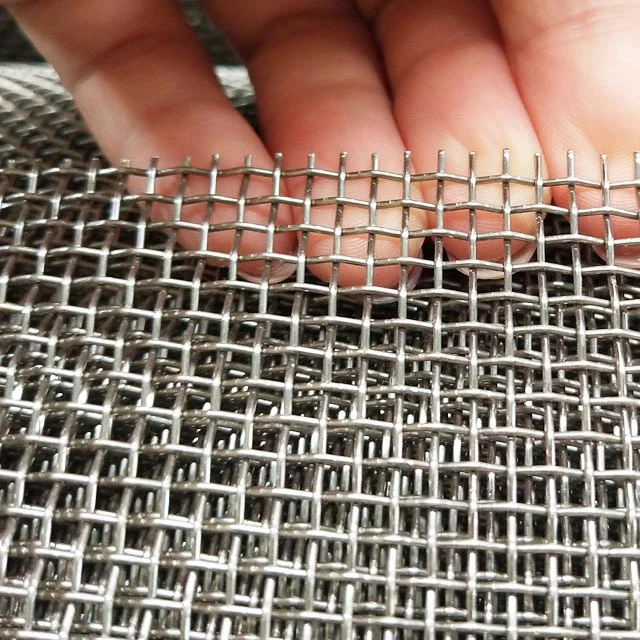
- Wire Drawing & Weaving: High-purity metal wires are drawn to precise diameters. These wires are then woven into mesh sheets using advanced looms, ensuring uniform mesh count and consistent pore size. Weaving patterns (e.g., plain weave, twilled weave, Dutch weave) are chosen based on required filtration efficiency and mechanical strength.
- Precision Cutting: The woven mesh sheets are precisely cut into disc shapes. This is typically achieved through high-precision stamping, laser cutting, or plasma cutting, depending on material thickness and required edge finish. This step ensures exact diameters and minimizes material distortion. For example, precision cutting ensures the integrity of discs for applications requiring exact mesh sanding discs 125mm or larger diameters.
- Multi-Layer Assembly & Welding: For multi-layer discs, multiple layers of mesh with varying micron ratings are stacked. The coarser layers provide structural support and pre-filtration, while finer layers achieve the desired filtration efficiency. These layers are then securely bonded using advanced welding techniques, such as resistance welding or spot welding, to create robust welding spots. This fusion prevents layer separation and enhances structural integrity, crucial for filters experiencing high differential pressures.
- Edge Treatment & Reinforcement: Edges can be reinforced with an outer rim, crimping, or specific welding techniques to prevent fraying and provide additional mechanical stability for demanding applications.
- Cleaning & Degreasing: Post-manufacturing, the discs undergo thorough cleaning processes, including ultrasonic cleaning and degreasing, to remove any manufacturing residues, oils, or particles. This ensures the discs are pristine and ready for critical applications, preventing contamination.
- Quality Control & Testing: Each batch undergoes rigorous testing. This includes visual inspection, dimensional checks, mesh count verification, bubble point testing (for absolute micron rating verification), flow rate testing, and pressure differential testing. Adherence to standards such as ISO 9001, ASTM E2016-11 for woven wire mesh, and customer-specific specifications is strictly maintained.
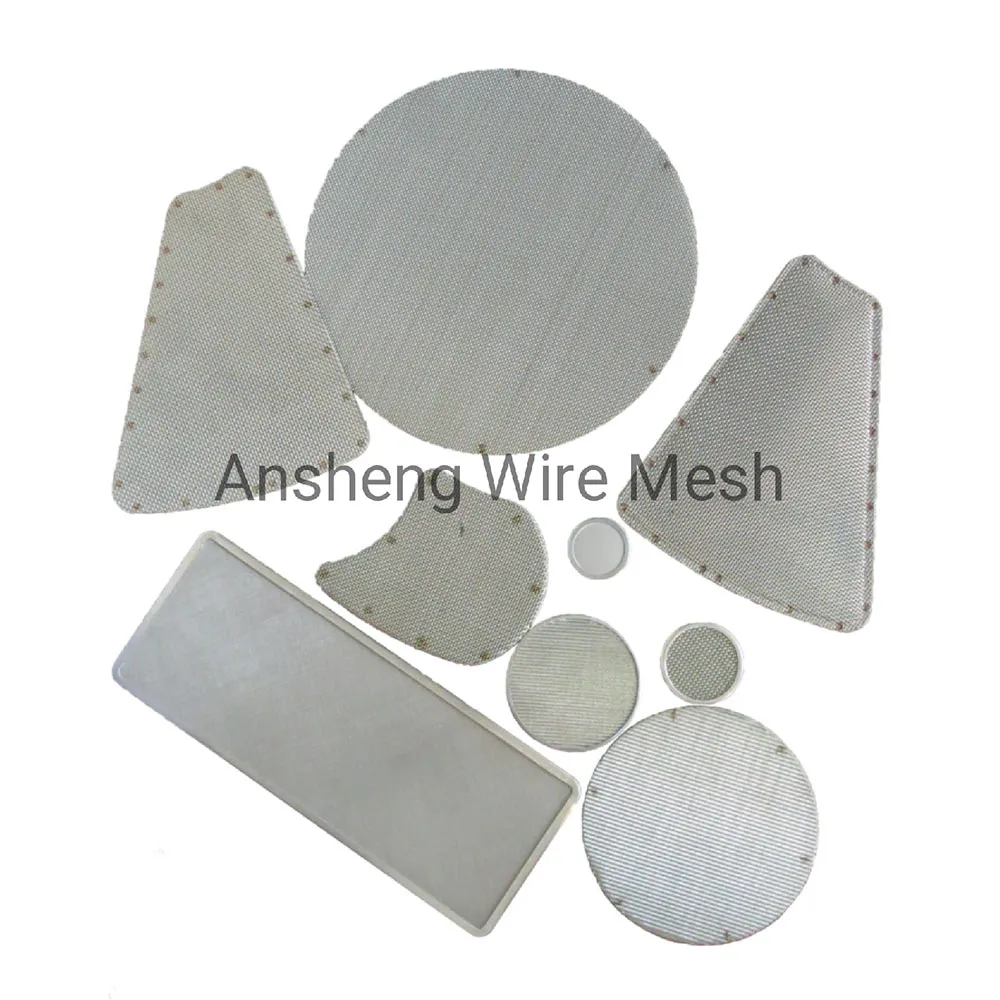
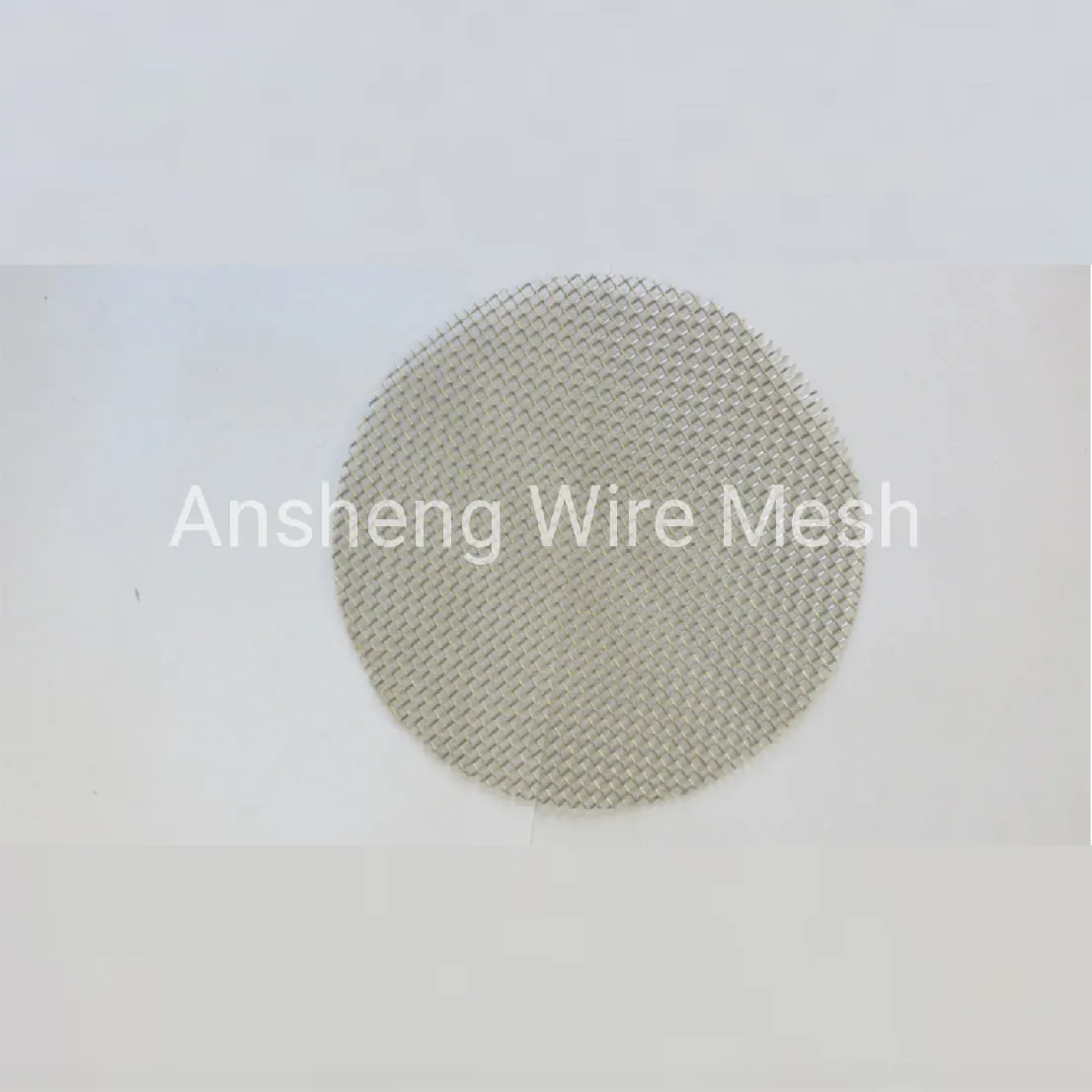
Fig 1: Illustrative overview of a precision wire mesh disc.
Target Industries and Advantages
These expertly crafted wire mesh discs are indispensable in sectors such as petrochemical, pharmaceutical, metallurgy, food & beverage, and water supply & drainage. In petrochemical applications, for instance, they demonstrate superior corrosion resistance when handling aggressive chemicals and high temperatures, leading to extended service life and reduced maintenance. In water treatment, their consistent filtration performance and robust construction contribute to significant energy savings by minimizing pressure drop across filtration systems, optimizing pump efficiency, and ensuring reliable contaminant removal.
Technical Specifications & Performance Parameters
Understanding the technical specifications of wire mesh discs is critical for B2B decision-makers and engineers. The "Multi-Layer Mesh With Welding Spots" product is engineered to deliver exceptional performance under challenging conditions. Key parameters define its suitability for specific industrial applications.
Key Product Specifications: Multi-Layer Mesh With Welding Spots
| Parameter | Description/Range |
|---|---|
| Material Grades | Stainless Steel (304, 304L, 316, 316L), Hastelloy, Monel, Inconel, Titanium, Duplex Steel |
| Mesh Count Range | From 2 mesh up to 635 mesh (for individual layers) |
| Filtration Rating | 0.5 micron to 2000 micron (absolute and nominal) |
| Standard Disc Diameters | 10mm to 1000mm. Commonly requested sizes include 125mm mesh sanding discs, 150mm mesh sanding discs, and 225mm mesh sanding discs equivalents for filtration applications. |
| Number of Layers | 2 to 8 layers (customizable) |
| Welding Method | Resistance spot welding, diffusion bonding, argon arc welding |
| Operating Temperature | Up to 600°C (depending on material) |
| Differential Pressure Tolerance | Up to 25 MPa (3625 psi), depending on construction |
| Certification | ISO 9001:2015 compliant manufacturing |
The intricate design of multi-layer screens with strategically placed welding spots ensures superior mechanical strength and prevents media migration, providing a consistent filtration performance even under high-pressure differentials. This makes them ideal for critical applications where filter integrity cannot be compromised.
Application Scenarios & Technical Advantages
The versatility and robust nature of wire mesh discs make them indispensable across a wide range of industrial applications, providing significant technical and operational advantages.
Diverse Application Scenarios:
- Polymer Melt Filtration: Critical for removing impurities in plastic and fiber extrusion processes, ensuring product quality and preventing die blockage.
- Hydraulic & Lubrication Oil Filtration: Protecting sensitive hydraulic systems from particulate contamination, extending equipment life and reducing downtime.
- Gas Purification: Used in various gas streams to remove solid particles, aerosols, and moisture, crucial for processes in the chemical and energy sectors.
- Catalyst Recovery: Essential in chemical reactors for efficient recovery of expensive catalysts, optimizing reaction efficiency and reducing material loss.
- Fluidization Beds: Providing uniform gas distribution in fluidization processes, which are vital in drying, cooling, and chemical reactions.
- Pharmaceutical & Food Processing: Ensuring sterile and particulate-free environments and products, meeting stringent regulatory requirements.
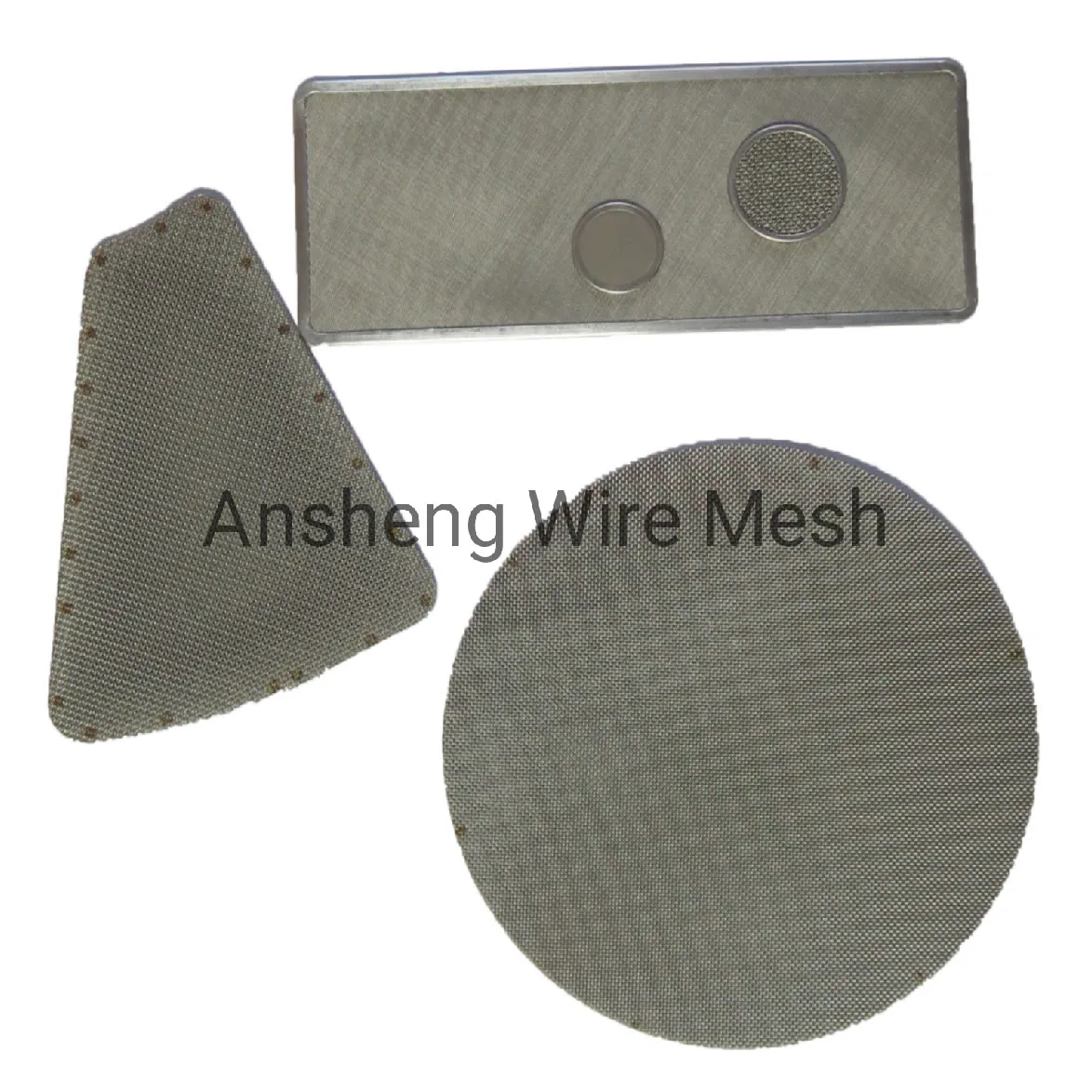
Fig 2: Example of wire mesh discs in a filtration assembly.
Tangible Technical Advantages:
- High Filtration Efficiency & Accuracy: Multi-layer construction allows for precise particle retention, achieving fine filtration down to sub-micron levels while maintaining high flow rates.
- Superior Mechanical Strength: The welding spots reinforce the multi-layer structure, preventing deformation under high differential pressures and ensuring filter integrity throughout its service life.
- Excellent Corrosion & Temperature Resistance: Manufactured from specialized alloys, these discs perform reliably in highly corrosive environments and extreme temperatures where polymer filters would fail.
- Consistent Pore Size Distribution: Precision weaving and manufacturing processes guarantee uniform pore sizes, leading to predictable and consistent filtration performance.
- Low Pressure Drop: Optimized mesh design and flow channels minimize pressure drop across the filter, reducing energy consumption and operating costs for pumps and compressors.
- Extended Service Life & Reusability: Their robust construction allows for repeated cleaning and backwashing, significantly extending their operational life and reducing replacement costs compared to disposable filters.
- Reduced Downtime: The longevity and reliability of these discs contribute to fewer filter changes and less unscheduled maintenance, enhancing overall plant productivity.
Vendor Comparison: Selecting the Right Partner for Wire Mesh Discs
Choosing the right supplier for wire mesh discs is a critical decision that impacts operational efficiency, product quality, and long-term cost. A comprehensive evaluation based on key criteria is essential for B2B procurement.
Key Considerations for Selecting a Wire Mesh Disc Supplier
| Criteria | Standard Supplier | Leading Specialist (e.g., Ansheng Filter Screen) |
|---|---|---|
| Material Quality & Traceability | Often uses commodity-grade materials; limited traceability. | Uses certified, premium-grade alloys (e.g., 316L from reputable mills); full material batch traceability. |
| Manufacturing Precision | Standard stamping/cutting; potential for burrs or inconsistent sizing. | Advanced laser/precision stamping; meticulous multi-layer alignment & robust welding spots. |
| Customization Capabilities | Limited to standard sizes and common mesh counts. | Extensive customization for material, dimensions (e.g., mesh sanding discs 125mm, 225mm mesh sanding discs for filtration), micron rating, layer configuration, edge treatment. |
| Quality Assurance & Certifications | Basic QC; may lack formal certifications. | ISO 9001:2015 certified; comprehensive in-house testing (bubble point, flow, pressure); provision of MTRs. |
| Technical Expertise & Support | Transactional sales; limited engineering consultation. | Experienced engineering team for design, material selection, and application optimization; dedicated after-sales support. |
| Lead Time & Fulfillment | Inconsistent lead times; limited expedited options. | Reliable lead times; ability to manage urgent orders; efficient logistics. |
Partnering with a specialist like Ansheng Filter Screen ensures not just product delivery, but also comprehensive technical support, consistent quality, and a commitment to long-term operational success.
Customized Solutions for Unique Industrial Demands
Standard wire mesh discs may not always suffice for highly specialized or challenging industrial processes. Recognizing this, leading manufacturers offer extensive customization capabilities to meet unique application requirements precisely.
Customization options extend to every aspect of the disc's design and construction:
- Material Alloys: Beyond standard stainless steels, custom solutions can incorporate exotic alloys like Hastelloy, Monel, Inconel, and Titanium for extreme chemical resistance, high-temperature stability, or specific mechanical properties.
- Dimensions: Precision engineering allows for bespoke diameters, from miniature discs for laboratory applications to large-scale discs for industrial reactors, ensuring perfect fit and optimal performance. This includes tailoring discs to match specific equipment, such as custom 125mm mesh sanding discs or filtration elements for unique machinery.
- Mesh Layers & Micron Rating: The number of mesh layers (from 2 to 8+) and their individual mesh counts can be precisely configured to achieve a specific micron rating and filtration profile (e.g., progressive filtration).
- Welding Patterns & Edge Treatment: Customized welding patterns and reinforced edges ensure maximum integrity under varying pressure and flow conditions. Options include crimping, solid ring borders, or specific welding patterns for enhanced durability.
- Surface Treatments: Specialized surface treatments can be applied to enhance properties like corrosion resistance, anti-fouling characteristics, or improved cleanability.
Our engineering team collaborates closely with clients to understand their specific process parameters, fluid characteristics, and performance goals. This consultative approach, combined with advanced manufacturing capabilities and prototyping, ensures the delivery of tailor-made wire mesh discs that optimize performance and reliability in even the most demanding applications.
Real-World Application Case Studies
Experience and proven results are critical for building trust. Here are examples illustrating the impact of high-performance wire mesh discs in challenging industrial environments.
Case Study 1: Enhanced Catalyst Recovery in Petrochemical Processing
A major petrochemical client faced significant catalyst loss during a cracking process, leading to increased operational costs and environmental concerns. Traditional filters struggled with high temperatures and aggressive chemical environments, resulting in frequent failures. Our solution involved designing custom multi-layer wire mesh discs using Inconel 625, with a precise 5-micron filtration rating and robust welding spots. The enhanced corrosion resistance and mechanical integrity of our discs drastically reduced catalyst carry-over by over 98%, cutting catalyst replacement costs by 25% annually and extending filter service life by 300%. Customer feedback highlighted the exceptional durability and consistent performance.
Case Study 2: Improved Purity in Pharmaceutical API Production
A pharmaceutical manufacturer required ultra-fine filtration for Active Pharmaceutical Ingredient (API) crystallization to meet stringent FDA and GMP standards. Their existing filters caused intermittent particle shedding and frequent blockages. We engineered custom 316L stainless steel multi-layer discs with an absolute filtration rating of 0.8 microns, featuring optimized flow paths and electropolished surfaces to prevent particle adhesion. This solution eliminated particle contamination, ensuring API purity compliance and increasing batch yield by 7%. The client reported significantly reduced cleaning cycles and enhanced product consistency.
Case Study 3: Optimized Hydraulic Fluid Filtration in Heavy Machinery
A heavy equipment manufacturer experienced premature wear in hydraulic pumps and valves due to inadequate contamination control. Standard pleated filters had short lifespans and high disposal costs. Our solution introduced durable, cleanable, two-layer stainless steel wire mesh discs designed for high-pressure hydraulic systems. These discs maintained a consistent 10-micron filtration efficiency even with fluctuating flow rates. The result was a 40% reduction in hydraulic component failures, extended oil change intervals, and an overall 15% reduction in maintenance costs within the first year of implementation. The client appreciated the longevity and reusability of the discs.
Ensuring Trust: FAQ, Lead Time, Warranty, and Support
Frequently Asked Questions (FAQ)
Q1: What materials are available for your wire mesh discs?
A1: We offer a comprehensive range including Stainless Steel (304, 304L, 316, 316L), Hastelloy, Monel, Inconel, Titanium, and Duplex Steel, selected based on your application's specific chemical compatibility and temperature requirements.
Q2: How do I determine the correct micron rating for my application?
A2: Selecting the appropriate micron rating depends on the desired particle removal efficiency, the nature of the fluid, and process specifications. Our technical experts are available for consultation to help you determine the optimal filtration rating and mesh configuration.
Q3: Can these multi-layer mesh discs be cleaned and reused?
A3: Yes, our multi-layer wire mesh discs are designed for reusability. Depending on the contaminant and material, they can be effectively cleaned using various methods such as backwashing, ultrasonic cleaning, or chemical cleaning, significantly extending their service life.
Lead Time & Fulfillment
Standard orders for commonly stocked materials and dimensions typically have a lead time of 2-3 weeks from order confirmation. Custom orders, due to specialized material sourcing and engineering requirements, generally range from 4-8 weeks. We offer expedited manufacturing and shipping options for urgent requirements, and our logistics team ensures efficient global delivery, providing tracking and full documentation.
Warranty Commitments
All our Multi-Layer Mesh With Welding Spots products are backed by a comprehensive warranty against manufacturing defects in material and workmanship for a period of one year from the date of shipment. This warranty underscores our commitment to quality and customer satisfaction, ensuring that our wire mesh discs meet the highest performance standards.
Customer Support Information
Our dedicated customer support and technical service teams are available to assist you with product selection, technical inquiries, order processing, and after-sales support. You can reach us via phone at [Insert Phone Number Here] or email at [Insert Email Address Here]. We pride ourselves on responsive and knowledgeable support to ensure your complete satisfaction.
References
- Journal of Filtration and Separation. "Advances in Multi-Layered Metal Mesh Filtration Media." [Hypothetical Journal/Year]
- American Society of Mechanical Engineers (ASME). "Standards for Pressure Vessels and Piping Components." [Hypothetical Standard Reference]
- NACE International (formerly National Association of Corrosion Engineers). "Material Selection for High-Temperature Corrosive Environments." [Hypothetical Publication/Year]
- International Organization for Standardization (ISO). "Quality Management Systems – Requirements (ISO 9001:2015)."
Post time: Sep . 22, 2025 12:10