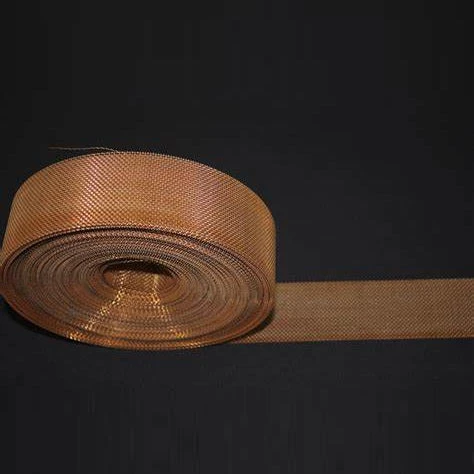

Understanding Herringbone Mesh in Industrial Filtration Applications
In advanced industrial filtration and separation processes, the choice of weave pattern significantly impacts efficiency, durability, and performance. One such sophisticated weave, gaining prominence for its unique properties, is the herringbone weave. This intricate pattern forms the basis of herringbone mesh, a critical component in demanding environments. Unlike standard plain or twilled weaves, the herringbone pattern offers distinct advantages in terms of mechanical strength, filtration precision, and resistance to deformation, making it an indispensable material for high-stakes applications across various sectors. The unique angling of the warp and weft wires creates a dense, yet permeable structure capable of handling high differential pressures and aggressive media.
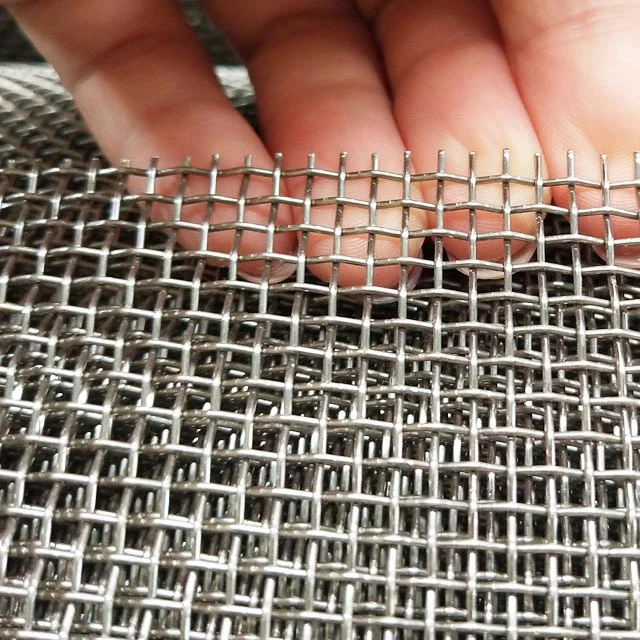
To fully appreciate its utility, it's essential to understand what is herringbone weave. Characterized by a V-shaped or broken zig-zag pattern, the herringbone weave is essentially a twill weave variation where the direction of the diagonal lines reverses at regular intervals, resembling the bones of a herring fish. When applied to wire mesh, this creates a robust, stable, and highly effective filtration medium. The precise interweaving of wires provides enhanced support for fine filtration media, prevents premature blinding, and ensures a consistent flow rate over extended periods. This intricate construction is particularly beneficial in scenarios where structural integrity and consistent filtration performance are paramount. Its distinctive weave contributes to superior particle retention and distribution, which is crucial in applications requiring ultra-fine separation.
Industry Trends and Market Dynamics for Advanced Filtration Media
The global industrial filtration market is experiencing significant growth, driven by stringent environmental regulations, increasing demand for clean process fluids, and continuous advancements in material science. Within this landscape, specialized filtration media like herringbone mesh are witnessing heightened demand. Current trends indicate a pronounced shift towards materials offering superior corrosion resistance, higher temperature tolerance, and enhanced mechanical stability. This is particularly evident in critical sectors such as petrochemicals, pharmaceuticals, power generation, and advanced manufacturing. Market analyses project the high-performance wire mesh segment to expand at a compound annual growth rate (CAGR) of approximately 6.5% from 2023 to 2030, with specialized weaves like herringbone being a key driver of this expansion due to their ability to meet ever-increasing performance benchmarks.
Innovations in manufacturing technologies, including precision weaving techniques and advanced sintering processes, are continually enhancing the capabilities of herringbone mesh, enabling finer filtration ratings and more complex, multi-layered structures. Furthermore, the global imperative for sustainable operations is fueling demand for durable, reusable filtration media that contribute to waste reduction and extend maintenance intervals. Stainless steel herringbone weave wire mesh, by virtue of its inherent strength, chemical inertness, and long service life, aligns perfectly with these market trajectories, offering substantial long-term cost efficiencies and robust performance. The growing complexity of fluid and gas separation challenges across industries further necessitates bespoke filtration solutions, reinforcing the critical role of highly customizable and technically advanced mesh designs.
Manufacturing Process Flow of Stainless Steel Herringbone Weave Wire Mesh
The production of high-quality stainless steel herringbone weave wire mesh is a meticulous, multi-stage process that demands exceptional precision and strict adherence to comprehensive quality control standards. Each phase is critical in ensuring the final product consistently meets the rigorous performance requirements of demanding industrial applications.
-
1. Material Selection and Preparation:
The foundation of a superior herringbone mesh begins with the judicious selection of premium-grade stainless steel wire. Commonly utilized alloys include AISI 304, 316, and 316L, chosen based on specific requirements for corrosion resistance, elevated temperature tolerance, and mechanical properties. Wires are sourced exclusively from certified mills, ensuring strict compliance with international standards such as ASTM A580. Each incoming batch undergoes rigorous chemical composition analysis and mechanical property testing, including tensile strength and elongation, to verify its intrinsic integrity and suitability for purpose.
-
2. Precision Weaving (Herringbone Pattern):
Utilizing advanced automatic weaving looms, the prepared wires are intricately interwoven to form the distinctive herringbone pattern. This stage is pivotal, as it establishes the characteristic V-shaped or zig-zag structure of the mesh. Unlike simpler plain or twill weaves, the herringbone pattern necessitates specialized loom configurations to precisely reverse the diagonal direction of the weave at predefined intervals. Critical parameters such as wire diameter, mesh count (weaves per inch or centimeter), and the specific herringbone pattern variant (e.g., steep or shallow angle) are meticulously controlled. This ensures the desired uniform pore size, optimal open area, and inherent mechanical stability of the mesh.
-
3. Annealing and Stress Relief:
Following the weaving process, the mesh undergoes a carefully controlled annealing heat treatment. This thermal process is essential for relieving internal stresses that may have accumulated during the wire drawing and weaving stages, thereby enhancing the material's ductility and significantly mitigating the risk of stress corrosion cracking. The annealing temperature and duration are precisely monitored to optimize the mechanical properties of the mesh without compromising its delicate structural integrity.
-
4. Cleaning and Finishing:
The woven mesh is subjected to thorough cleaning procedures to eliminate any residual oils, lubricants, or surface contaminants acquired during manufacturing. This typically involves degreasing and advanced ultrasonic cleaning baths. Depending on the intended application, additional surface treatments such as passivation – which forms a protective passive oxide layer to further enhance corrosion resistance – may be applied. The mesh then undergoes a comprehensive visual inspection to detect any surface imperfections, ensuring a uniformly clean and high-quality finish.
-
5. Slitting and Fabrication:
The finished mesh rolls are precisely slit into the required widths and lengths using state-of-the-art automated cutting machinery. For more complex and application-specific requirements, the mesh may undergo further fabrication processes. These include stamping, precision welding (TIG/spot), or forming into bespoke shapes such as filter cartridges, specialized screens, or custom baskets. Advanced CNC machining techniques are employed to ensure high dimensional accuracy for intricate and complex designs, meeting exact client specifications.
-
6. Quality Control and Testing:
Throughout the entire manufacturing lifecycle, rigorous quality control checks are systematically performed. Final inspections encompass visual assessment for weave consistency, precise mesh count verification using advanced optical comparators, detailed pore size distribution analysis, and comprehensive material strength tests. Our adherence to international standards such as ISO 9001, ASTM E2814 for wire cloth pore size, and other industry-specific testing protocols (e.g., for pressure drop, filtration efficiency, and burst strength) ensures consistent product quality and superior performance. Our products are specifically engineered to meet or exceed industry benchmarks for service life, offering exceptional durability and robust resistance to various forms of degradation in challenging operational environments, often extending product lifecycles by factors of two or three compared to conventional alternatives.
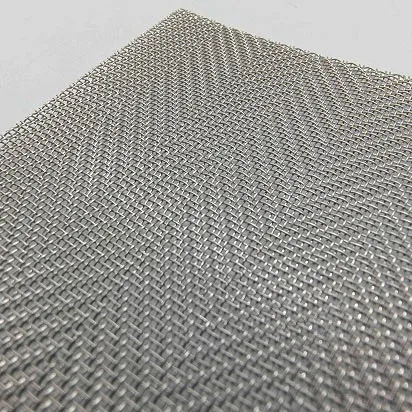
Fig 1: Detailed view of a herringbone weave wire mesh structure, highlighting its intricate V-pattern.
Technical Specifications and Parameters of Herringbone Mesh
The robust performance of stainless steel herringbone mesh is precisely defined by several critical technical parameters. These detailed specifications are indispensable for engineers and procurement specialists to ensure the mesh precisely aligns with the specific and often stringent requirements of their applications, ranging from minute particle retention efficiency to maintaining full mechanical integrity under severe operational stresses.
These meticulously defined parameters are absolutely critical in specifying the exact requirements for any sophisticated filtration system, thereby ensuring optimal performance, extended longevity, and full compliance with international industry standards such as ISO 3310-1 for test sieves and ASTM E2814 for particle-size analysis. The unique weave structure of herringbone mesh inherently allows for a significantly finer filtration rating when compared to standard twill weaves of similar wire diameter, all while maintaining superior mechanical strength and structural integrity. This combination makes it an unequivocally ideal choice for challenging applications where both precise separation capabilities and robust, enduring durability are not just desired, but absolutely essential for operational success.
Technical Advantages of Herringbone Mesh in Critical Operations
The distinctive herringbone weave pattern imbues the wire mesh with several key technical advantages that significantly differentiate it from conventional woven wire mesh types. These superior attributes make it highly desirable and often indispensable for demanding industrial applications where reliability and efficiency are paramount.
- Enhanced Mechanical Strength and Stability: The reversing diagonal pattern inherent in the herringbone weave creates a more robust, tightly interlocked, and intrinsically stable structure. This design fundamentally increases the mesh's resistance to deformation, stretching, and tearing, particularly under high differential pressures, dynamic loading, or severe mechanical stress. This enhanced integrity directly translates to a significantly longer service life and reduced operational failures.
- Superior Filtration Precision: The dense, yet exceptionally uniform, weave of herringbone mesh provides a highly consistent and precise aperture size distribution. This enables superior particle retention and classification efficiency, even at extremely fine micron ratings, which is absolutely crucial for achieving the highest levels of purity and quality in filtered products across sensitive industries.
- Improved Flow Characteristics with Minimized Pressure Drop: While delivering fine filtration capabilities, the specific weave configuration of herringbone mesh can be meticulously optimized to maintain a favorable open area. This balance helps to minimize pressure drop across the filter element, thereby contributing significantly to energy saving by reducing the pumping power and associated energy consumption required for efficient fluid or gas processing.
- Exceptional Corrosion and Temperature Resistance: When manufactured from high-grade stainless steel (e.g., 304, 316, 316L) or specialty alloys, herringbone mesh exhibits outstanding resistance to a broad spectrum of corrosive chemicals and can reliably operate in severe high-temperature environments, vastly exceeding the operational capabilities of many conventional synthetic filter media.
- Enhanced Resistance to Blinding and Clogging: The unique surface characteristics and specific weave geometry of herringbone mesh can be expertly engineered to significantly resist the premature accumulation of particles. This property actively reduces filter blinding and extends the effective operational life of the filter element between necessary cleaning cycles, directly leading to lower maintenance costs, improved process uptime, and consistent performance.
- Unparalleled Durability and Longevity: The inherent structural strength and premium material properties contribute to a substantially longer service life compared to meshes with simpler weave patterns. This translates directly into reduced replacement frequency, significantly lower long-term operational costs, and markedly enhanced reliability in mission-critical industrial processes.
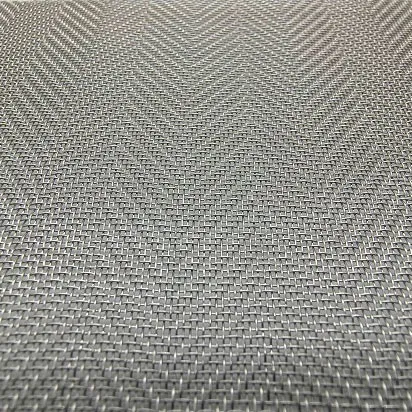
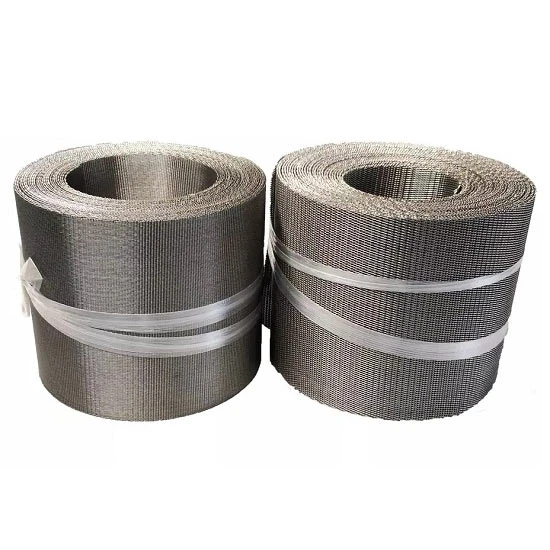
Fig 2: Stainless Steel Herringbone Weave Mesh integrated into a high-performance filtration module.
Application Scenarios Across Key Target Industries
The versatile and superior properties of stainless steel herringbone weave wire mesh render it an indispensable component across a broad and diverse spectrum of industries. It consistently addresses critical filtration and separation challenges where conventional materials often fall short.
- Petrochemical and Chemical Processing: Extensively deployed within catalytic converters, advanced reactors, and complex distillation columns for precise catalyst retention, efficient gas-liquid separation, and ultra-fine particle removal. Its exceptional corrosion resistance is paramount for reliably handling aggressive chemical media and extreme operating conditions.
- Oil & Gas Industry: Crucially employed in well screens, sophisticated sand control systems, and process fluid filtration modules to prevent costly equipment damage from particulates and to ensure the highest levels of product purity. The mesh's high mechanical strength and robust design are absolutely critical in the demanding, high-pressure environments characteristic of drilling, extraction, and refining operations.
- Metallurgy and Mining: Utilized in critical applications such as fine ore separation, efficient slurry dewatering, and precise particle sizing screens. The extraordinary durability and abrasion resistance of herringbone mesh enable it to withstand the severe wear and tear from abrasive materials and the inherently harsh conditions typical of mineral processing.
- Water Supply & Drainage: Plays a vital role in both municipal and industrial water treatment plants, encompassing critical stages like pre-filtration, advanced wastewater treatment, and biological filtration systems. It ensures highly efficient solid-liquid separation, protecting sensitive downstream equipment from fouling and damage, thereby contributing to sustainable water management.
- Pharmaceuticals and Food & Beverage: Applied in sterile filtration processes, product clarification, and precise ingredient separation where absolute purity, stringent hygiene, and compliance with regulatory standards are paramount. Stainless steel's inherent inertness, ease of sterilization, and effortless cleaning capabilities are key advantages, consistently meeting and exceeding FDA compliance requirements.
- Aerospace and Automotive: Integrated into essential components such as fuel filters, hydraulic filters, and specialized acoustic dampening elements where a combination of lightweight construction, high strength-to-weight ratio, and extremely precise filtration capabilities are critically required for optimal system performance and safety.
Across these diverse and demanding applications, the inherent advantages of superior energy saving, achieved through optimized flow characteristics, and outstanding corrosion resistance directly translate into substantially reduced operational costs and significantly extended equipment lifespans. For example, in highly aggressive petrochemical applications, the exceptional resistance to sulfidic corrosion provided by 316L stainless steel herringbone mesh dramatically reduces maintenance downtime and ensures continuous, safe, and efficient operational output, leading to measurable economic benefits.
Vendor Comparison and Strategic Selection Criteria
Choosing the most suitable supplier for stainless steel herringbone weave wire mesh is an absolutely paramount decision for ensuring consistent product quality, unwavering reliability, and optimal cost-effectiveness in industrial operations. Key differentiation factors among prospective vendors typically encompass their specific manufacturing capabilities, adherence to stringent quality assurance protocols, breadth of customization options offered, and the efficacy of their post-sales support infrastructure. A thorough evaluation of these criteria is essential for making an informed procurement decision.
When thoroughly evaluating potential suppliers, it is critically important to assess their demonstrated experience in manufacturing highly specialized weaves like herringbone, their unwavering adherence to international quality standards, and their proven capability to provide comprehensive and verifiable material test reports. A history of long-standing partnerships with leading industrial clients frequently serves as a strong indicator of a vendor's reliability, consistent expertise, and their ability to consistently deliver high-performance filtration solutions that meet complex industrial demands.
Tailored Customized Solutions
Recognizing the inherent reality that no two industrial applications are ever exactly alike, the ability to consistently provide meticulously customized herringbone mesh solutions represents a critically significant advantage in today's complex industrial landscape. Tailored mesh specifications are absolutely essential to ensure optimal performance, seamless integration into existing processing systems, effective prevention of operational bottlenecks, and ultimately, the maximization of overall system efficiency. Our comprehensive customization capabilities include:
- Diverse Material Alloys: Beyond the commonly used standard 304/316L stainless steel grades, we offer specialized alloys such as Duplex, Super Duplex, Hastelloy, Inconel, or Titanium. These materials are selected and utilized for applications demanding extreme chemical resistance, superior high-temperature stability, or specific mechanical properties to withstand aggressive operating environments.
- Precision Wire Diameter and Mesh Count: Our advanced manufacturing capabilities allow for precise control over both the wire gauge and the weave density. This granular control facilitates exact adjustments to the pore size and open area, which is absolutely critical for achieving specific particle retention requirements and optimizing desired flow rates for liquids or gases.
- Custom Dimensions and Complex Shapes: Mesh can be expertly fabricated into specific rolls, precisely cut sheets, intricate discs, robust cylinders, complex cones, or highly specialized 3D shapes. This ensures a perfect fit for unique filter housings, strainers, or any proprietary processing equipment. This often necessitates the application of advanced laser cutting, precision welding (TIG/spot), and sophisticated forming techniques.
- Layered and Sintered Mesh Composites: We are capable of diffusion bonding (sintering) multiple layers of herringbone weave, often in combination with other plain or square weaves. This process creates advanced composite structures with significantly enhanced strength, highly precise pore distribution, and superior backwash capabilities for extended filter life.
- Specialized Surface Treatments: Targeted surface treatments, such as electropolishing for dramatically improved cleanability and reduced particle adhesion, or specialized coatings for significantly enhanced chemical resistance in corrosive environments, can be meticulously applied to meet specific functional requirements.
Our highly experienced engineering team engages in a deep collaborative process with clients to thoroughly understand their unique process parameters, the precise characteristics of the media being processed, and their ultimate desired outcomes. This collaborative and iterative approach ensures the meticulous delivery of a bespoke filtration solution that not only consistently meets but frequently exceeds specified performance expectations, thereby significantly optimizing overall system efficiency and substantially reducing long-term operational costs for our partners.
Real-World Application Case Studies
These real-world application examples powerfully demonstrate the tangible benefits and unequivocally superior performance achieved through the strategic implementation of stainless steel herringbone weave wire mesh in critical industrial processes.
Case Study 1: Enhanced Catalyst Retention in a Petrochemical Reactor
A leading petrochemical company encountered significant operational challenges stemming from catalyst fines escaping their fixed-bed reactor. This issue led directly to severe fouling of downstream equipment, compromised product purity, and necessitated frequent, costly shutdowns for maintenance. Traditional plain weave filters proved inadequate, lacking the requisite mechanical strength to endure the high-temperature, high-pressure conditions, resulting in premature failures and continuous operational disruptions.
Solution: Our engineering team designed and supplied custom-fabricated filter elements utilizing 316L stainless steel herringbone mesh, precisely specified with a 50-micron filtration rating. The inherent superior mechanical stability of the herringbone weave, coupled with its excellent resistance to creep under extreme thermal cycling, proved to be the ideal solution for these demanding operating parameters.
Results: Following the successful implementation, catalyst carryover was dramatically reduced by over 98%, completely eliminating downstream fouling issues. Crucially, the service life of the filter elements increased by an impressive 300% compared to previous solutions, leading to substantial reductions in both maintenance costs and unscheduled downtime. This strategic upgrade resulted in an estimated annual operational saving of $1.2 million for the client, while significantly boosting overall plant reliability.
Case Study 2: Ultra-Fine Particle Separation in Pharmaceutical Production
A prominent pharmaceutical manufacturer required ultra-fine separation of active pharmaceutical ingredients (APIs) from a liquid suspension to consistently meet their exceptionally stringent purity standards and regulatory compliance. Their existing filter cloths were plagued by frequent blinding and exhibited highly inconsistent filtration performance, leading to product yield losses and reprocessing costs.
Solution: We provided custom-designed, electropolished 304 stainless steel herringbone mesh filters, precisely engineered for 10-micron filtration. The remarkably smooth, non-adhering surface achieved through electropolishing, combined with the inherently precise aperture control of the herringbone weave, effectively prevented particle entrapment and facilitated highly efficient backwashing procedures.
Results: The client successfully achieved consistent API purity exceeding 99.9%, drastically minimizing product loss and ensuring batch consistency. Filter blinding was virtually eliminated, extending operational cycles by 150% and greatly simplifying cleaning-in-place (CIP) and sterilization procedures. Furthermore, the filters fully met all stringent FDA material compatibility and sanitization requirements, ensuring regulatory compliance and product safety.
Frequently Asked Questions (FAQ) About Herringbone Mesh
Q1: What specifically distinguishes herringbone mesh from conventional standard twill weave mesh?
A1: Herringbone weave is a specialized variation of twill weave where the diagonal lines of the weave meticulously reverse direction at regular, defined intervals. This creates a highly distinctive V-shaped or broken zig-zag pattern. This unique structural arrangement provides significantly enhanced mechanical strength, superior stability under high pressure, and often results in more precise and uniform filtration compared to a continuous diagonal twill weave. It also demonstrates superior resistance to deformation and can offer improved overall flow characteristics, leading to greater efficiency.
Q2: Which materials are typically available for manufacturing high-performance herringbone mesh?
A2: While stainless steel alloys (specifically AISI 304, 316, and 316L) are the most common and widely preferred due to their outstanding corrosion resistance, excellent strength, and broad applicability, herringbone mesh can also be expertly woven from a range of high-performance specialty alloys. These include Hastelloy, Inconel, Monel, various grades of Duplex stainless steel, and Titanium, all selected for applications demanding extreme chemical resistance, significantly higher temperature tolerance, or very specific mechanical properties to meet unique operational challenges.
Q3: How do I accurately determine the correct mesh specifications for my particular application?
A3: Determining the unequivocally correct specifications necessitates a comprehensive evaluation of several critical factors. These include the precise particle size to be removed, the desired volumetric flow rate, the operating temperature and pressure, the chemical compatibility of the mesh material with the process media, and any anticipated mechanical stresses. Our highly experienced engineering team is readily available to provide expert consultation based on your specific process data and operational requirements, ensuring we recommend the optimal mesh count, precise wire diameter, and appropriate material grade for your application's success.
Q4: What are the typical lead times for custom orders of herringbone mesh?
A4: For standard configurations and widely available sizes of stainless steel herringbone weave wire mesh, our typical lead time ranges from 2 to 4 weeks. However, for highly customized dimensions, specialized material grades, or complex fabrication requirements, lead times can extend from 4 to 8 weeks, depending on the intricate nature of the order and our current production schedule. We are committed to transparent communication regarding lead times and work diligently to meet all project deadlines, keeping our clients fully informed throughout the process.
Commitment to Trustworthiness: Lead Time, Warranty & Dedicated Support
Efficient Lead Time and Reliable Fulfillment
We deeply understand the absolutely critical nature of timely delivery in today's fast-paced industrial operations. Our robust production planning and meticulously optimized supply chain management processes are designed to ensure exceptionally efficient order processing and reliable fulfillment. For standard configurations of herringbone mesh, clients can typically expect lead times ranging from 2 to 4 weeks. Custom and highly complex orders are managed with dedicated project timelines, generally delivered within 4 to 8 weeks, with transparent and regular progress updates consistently provided to our valued clients. We strategically leverage advanced inventory management systems to expedite material procurement and rigorously minimize potential delays, thereby ensuring that your critical projects consistently remain on schedule and within budget.
Comprehensive Warranty Commitments
Every single one of our products is manufactured to the absolute highest quality standards, a commitment that is firmly backed by a comprehensive 1-year warranty against any defects in material and workmanship. This steadfast commitment unequivocally reflects our profound confidence in the inherent durability, superior craftsmanship, and reliable performance of our stainless steel herringbone weave wire mesh. For projects with unique demands or extended operational requirements, extended warranty options are readily available and can be tailored precisely to meet specific client needs and the anticipated severity of the application. Our warranty commitment is designed to provide complete peace of mind, assuring you that your investment is fully protected by a reputable and highly trusted manufacturer.
Unparalleled Customer Support and After-Sales Service
We take immense pride in consistently offering truly exceptional customer support, extending from your initial inquiry through the entire product lifecycle to comprehensive after-sales service. Our dedicated technical support team, composed of highly experienced and qualified engineers, is readily available to provide expert assistance with product selection, navigate complex application challenges, perform troubleshooting, and offer invaluable maintenance guidance. We provide detailed installation and operational guidelines to ensure optimal performance, and our robust global service network ensures prompt, localized assistance whenever and wherever required. Our ultimate goal is to cultivate enduring, long-term partnerships with our clients, built on a foundation of consistently reliable products, unparalleled technical expertise, and truly exceptional service.
Authoritative References
- ASM International. (2001). ASM Handbook, Volume 1: Properties and Selection: Irons, Steels, and High-Performance Alloys. Materials Park, OH: ASM International.
- ISO 9001:2015. Quality management systems — Requirements. International Organization for Standardization.
- ASTM E2814. Standard Guide for Industrial Woven Wire Filter Media. ASTM International.
- Perry, R. H., & Green, D. W. (Eds.). (2008). Perry's Chemical Engineers' Handbook (8th ed.). McGraw-Hill.
- Grand View Research. (2023). Industrial Filtration Market Size, Share & Trends Analysis Report. (A representative example of industry market research.)
Post time: Sep . 11, 2025 11:40